 listicle
7 Best NCLEX Study Guides for Visual Learners
Last Updated: October 29, 2026
Quick Summary
TemplateForge is our top pick for the best nclex study guide for visual learners, offering printable PDFs and concept map templates built for drawing, color-coding, and annotating notes. Pair it with a separate practice-question source, since TemplateForge is not a QBank.
- We judged guides on visual content, active recall support, printability, and alignment with evidence-based study techniques.
- SimpleNursing suits students who need motion, animation, and instructor narration to lock in concepts.
- Build your own concept map rather than copying a finished one for the most effective study.
- Keep each flashcard to one concept with a visual prompt on the front and rationale on the back.
- Front-load high-yield content like pharmacology and pathophysiology while your energy is highest.
Table of Contents
- Quick Comparison: Best NCLEX Study Guides for Visual Learners
- How We Evaluated These Visual Study Guides
- 1. TemplateForge: Printable NCLEX Study Guide and Concept Map Library
- 2. SimpleNursing: Video-Based Visual Learning
- 3. Archer Review, Kaplan, and Other Budget-Friendly Options
- 4. Building Effective NCLEX Concept Maps
- 5. NCLEX Flashcards That Work for Visual Learners
- 6. Structuring Your NCLEX Study Schedule for Visual Study
- The Bottom Line on Choosing a Visual Study Guide
- Frequently Asked Questions
Quick Comparison: Best NCLEX Study Guides for Visual Learners
Finding the best NCLEX study guide for visual learners starts with one question: does it show you the concept, or just tell you about it? Most nursing students drown in dense text when their brains need diagrams, color coding, and mapped relationships. This guide from TemplateForge cuts through the noise with seven options ranked by how well they serve visual processing.
The short answer: TemplateForge is our top pick for printable, high-yield visual study materials. Below, we explain how to match a guide to your study style.
| Guide | Format | Best For | Pricing |
|---|---|---|---|
| TemplateForge | Printable PDFs, concept maps | Self-paced visual study | See pricing page |
| SimpleNursing | Video lessons | Watch-and-learn students | Subscription, see site |
| Archer Review | QBank + review | Budget-conscious candidates | See site |
| Kaplan | Structured course | Test-endurance builders | See site |
How We Evaluated These Visual Study Guides
We judged each option on four criteria: how much of the content is visual rather than text-heavy, whether the format supports active recall, how easy it is to print or annotate, and whether the study method aligns with evidence-based techniques like spaced repetition. Our Study Mastery Cheat Sheet covers evidence-based study methodology including active recall and spaced repetition. According to research on visual learning from the University of California, pairing images with concepts improves retention compared to text alone.
We also weighed practical concerns: cost transparency, setup time, and whether a guide adapts to different learning needs. A pretty diagram that never gets reviewed is worthless. What matters is whether the format pulls you back into active practice.
1. TemplateForge: Printable NCLEX Study Guide and Concept Map Library
TemplateForge earns the top spot because it treats visual learning as a system, not a gimmick. Readers interested in printable visual guides can visit the NCLEX-PN Study Guide product page to buy it. The library delivers high-yield study guides and concept map templates built for immediate download.
Best for: Students who learn by drawing, color-coding, and physically annotating their notes. Skip if: You need live video instruction or a large practice-question bank.
Pros and Cons
Pros:
- Instant download delivery with no email required for free tools
- Documented, tested templates ready to use
- High-yield focus keeps review sessions tight
Cons:
- Not a QBank, so pair it with a separate practice-question source
- Printable format means you supply your own printer or annotation app
2. SimpleNursing: Video-Based Visual Learning
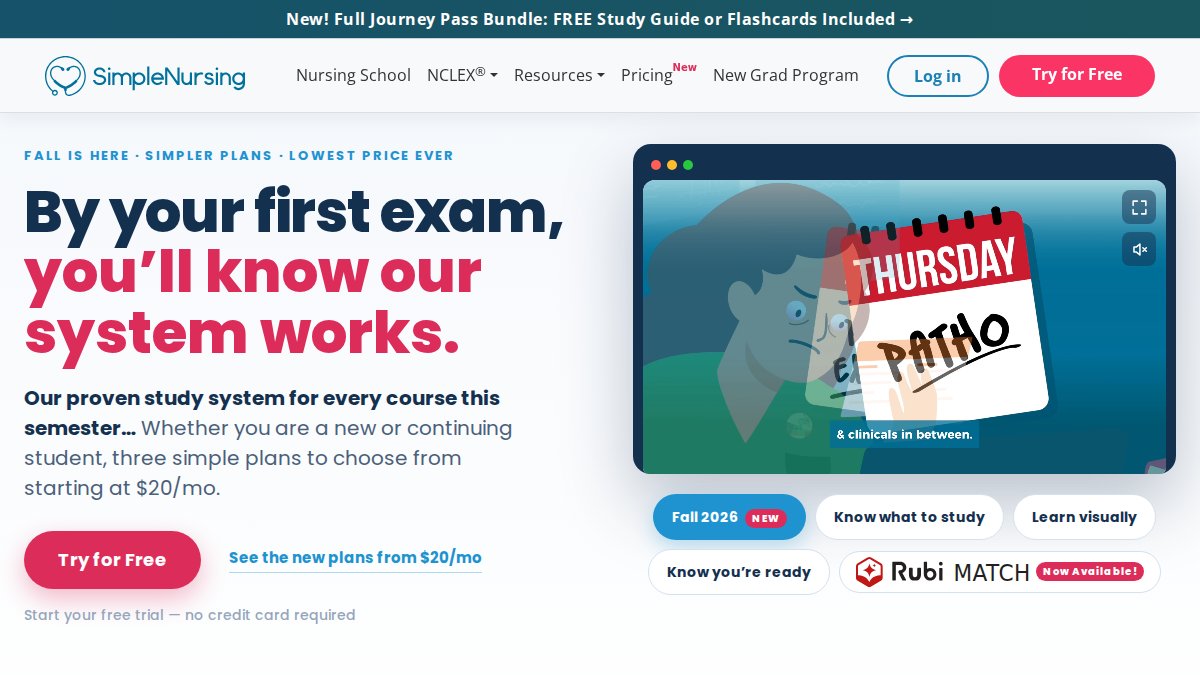
Best for: Students who need motion, animation, and instructor narration to lock in concepts. Skip if: You prefer self-paced reading and drawing over passive video watching.
3. Archer Review, Kaplan, and Other Budget-Friendly Options
If cost is your deciding factor, this tier matters. Pricing for review courses varies, so check each provider's site for current details.
Pair a question-based review course with a printable visual guide to cover the diagram side of your prep. For an honest side-by-side of a study guide versus UWorld, read NCLEX study guide vs UWorld to decide what's worth it.
4. Building Effective NCLEX Concept Maps
An NCLEX concept map is a visual diagram that connects a disease process to its pathophysiology, assessment findings, interventions, and expected outcomes on a single page. Building one forces active recall, which is exactly why it works.
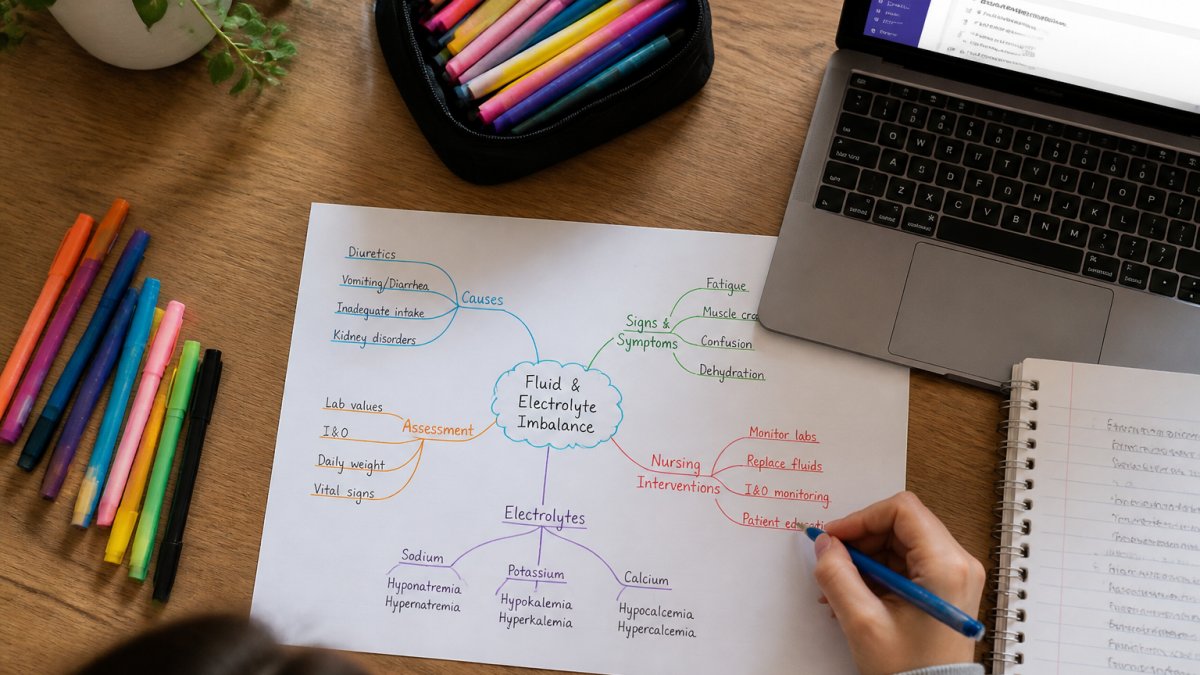
Start with the core concept in the center, branch to pathophysiology, then add assessment and interventions. Use color to separate body systems. Building your own map rather than copying a finished one is the most effective way to study.
5. NCLEX Flashcards That Work for Visual Learners
NCLEX flashcards work best for visual learners when they carry an image, a color cue, or a diagram on the front rather than a wall of text. Digital decks with spaced repetition scheduling beat paper stacks for consistency, but printed cards you can hold and sort still win for kinesthetic reinforcement.
Keep each card to one concept. Put the visual prompt on the front and the rationale on the back. Review daily in short sessions instead of one long cram.
6. Structuring Your NCLEX Study Schedule for Visual Study
A NCLEX study schedule for visual learners should block time for drawing, reviewing diagrams, and answering practice questions, not just reading. Map your weeks backward from your test date, then assign one system per block with a visual review at the end.
Front-load high-yield content like pharmacology and pathophysiology while your energy is highest.
The Bottom Line on Choosing a Visual Study Guide
The right guide is the one you'll actually open tomorrow. Match the format to how you process information, then commit to a schedule that forces active recall rather than passive rereading.
TemplateForge offers high-yield study guides and concept map templates for exactly this kind of prep. Products are ready to download, documented, and tested. Browse the library and get started with TemplateForge today.
Frequently Asked Questions
What is the best NCLEX study guide for visual learners?
The best NCLEX study guide for visual learners combines visual aids like concept maps, flowcharts, and color-coded diagrams with active recall practice. TemplateForge offers printable and digital study guides built around these formats, while SimpleNursing provides video-based visual instruction. Pairing a visual guide with regular NCLEX practice questions gives you the strongest preparation, since visual memory alone won't build the clinical judgment the exam tests.
How can visual learners study for the NCLEX effectively?
Visual learners retain more when they convert dense nursing concepts into diagrams, mind maps, and flowcharts. Start by building NCLEX concept maps for pathophysiology and pharmacology, then review them using spaced repetition. Color-code by body system or drug class so patterns stand out. Combine this with NCLEX flashcards that include images or symbols, and schedule short review sessions rather than long cram blocks to keep retention high.
Are diagrams and concept maps actually helpful for NCLEX preparation?
Yes. Concept maps force you to connect related nursing concepts, which mirrors how the NCLEX tests clinical judgment through linked scenarios. Mapping out a condition's pathophysiology, assessment findings, and nursing interventions in one visual builds the critical thinking the exam rewards. Research on visual learning supports that organizing information spatially improves recall compared with linear notes, making concept maps a practical study tool rather than just a nice-looking one.
How long should I study for the NCLEX each day using a visual study guide?
Most candidates benefit from two to four focused hours per day over a six to eight week NCLEX study schedule, rather than marathon sessions. Break each block into visual review (concept maps, flashcards) and active practice with NCLEX practice questions. Spaced repetition works best when you revisit diagrams at increasing intervals. Adjust the schedule to your first-time pass rate goals and the exam blueprint areas where you score weakest.