 how-to
Does NCLEX Prep Need Constant Updates in 2026?
Table of Contents
- What Actually Changes in NCLEX Exam Content
- How to Verify Your Current NCLEX Exam Plan Is Still Relevant
- Building a Sustainable NCLEX Study Schedule That Adapts
- Monitoring NCLEX Practice Questions for Accuracy
- Choosing NCLEX Prep Resources That Stay Current
- When to Replace Your Study Materials Entirely
- Common Mistakes Test-Takers Make With Outdated Resources
- Frequently Asked Questions
Last Updated: October 13, 2026
What Actually Changes in NCLEX Exam Content
The NCLEX exam itself evolves regularly. The National Council of State Boards of Nursing updates test content to reflect current nursing practice.
What changes most often:
- New clinical guidelines and best practices
- Emerging health conditions and treatments
- Updated medication protocols
- Changes to nursing regulations and standards
- Shifts in patient demographics and care settings
Your study materials need to reflect these changes. But here's what matters most: does nclex prep need constant updates? Not every update requires you to scrap your entire prep strategy.
At TemplateForge, we provide high-yield exam-prep study guides for nursing students preparing for high-stakes exams. You need to know what changed and what didn't.
How to Verify Your Current NCLEX Exam Plan Is Still Relevant
The single most important document to verify against is the NCLEX-RN Test Plan (and the NCLEX-PN Test Plan if you are taking the practical exam).
Here is a concrete verification process you can run in about 30 minutes:
- Download the current test plan from the National Council of State Boards of Nursing website. Save the PDF with the date you downloaded it.
- Note the effective date printed on the test plan. If your study materials predate that date, they may still be usable, but you need to confirm coverage of any newly emphasized categories.
- Compare the Client Needs percentages. The test plan lists the approximate percentage of questions devoted to each Client Needs category (for example, Safe and Effective Care Environment, Health Promotion and Maintenance, Psychosocial Integrity, and Physiological Integrity). If your prep resource organizes content differently, map it back to these categories.
- Check the integrated processes. Clinical Judgment, the Nursing Process, Caring, Communication and Documentation, and Teaching/Learning are woven through every category. A resource that treats these as separate chapters rather than integrated skills is a warning sign.
- Confirm your jurisdiction's requirements separately. Your state board of nursing sets eligibility, application fees, and authorization-to-test rules. Those are not in the test plan and change on their own timeline. Check your board's website directly rather than relying on a prep provider's summary.
- Look at the Next Generation NCLEX (NGN) item types. Case studies, bowtie items, matrix questions, and highlight-the-text items are part of the current exam. If your question bank is mostly traditional four-option multiple choice, it is not aligned.
NCLEX Test Plans and official exam resources
A study resource from 2024 is not automatically useless in 2026. If it covers the current test plan categories, uses NGN item types, and reflects current clinical guidelines, it still works. The question is not 'how old is it' but 'does it match the blueprint that is in effect right now.'
Ask yourself these questions:
- Does my study guide map to the current NCLEX Test Plan categories and percentages?
- Are the practice questions in NGN formats, not just legacy multiple choice?
- Do the rationales cite current clinical standards rather than retired protocols?
- Does my state board's candidate bulletin match what my prep provider told me?
If you answer yes to all four, your materials are still relevant.
Building a Sustainable NCLEX Study Schedule That Adapts
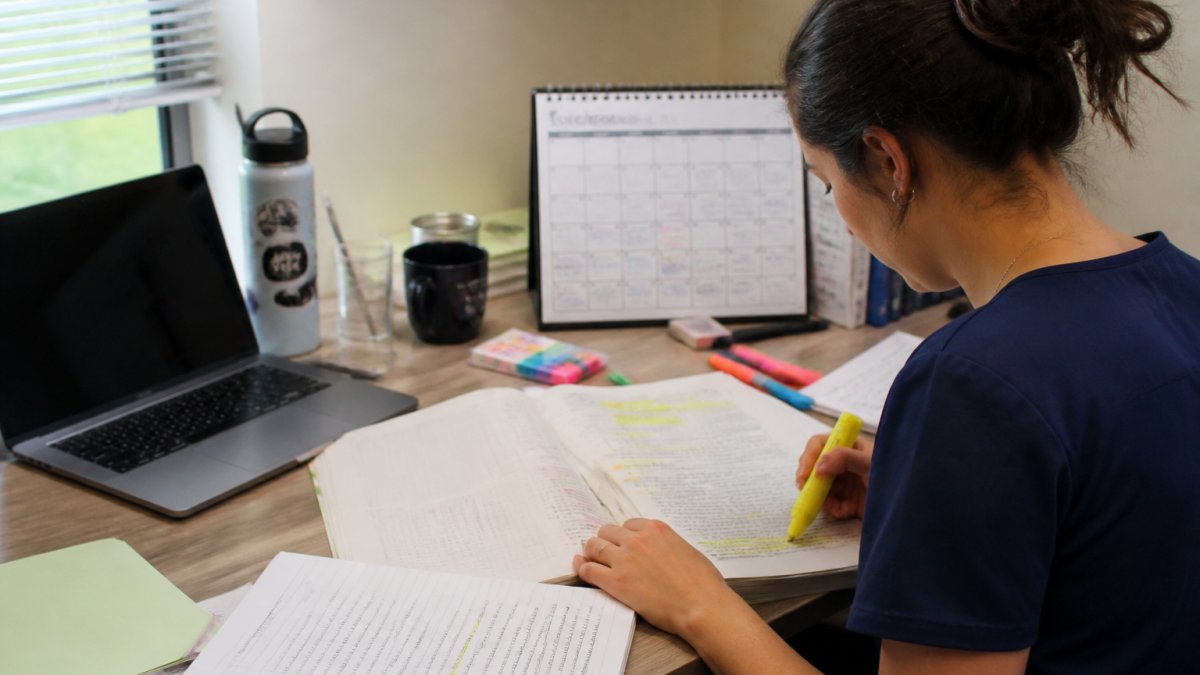
A fixed study schedule breaks when real life happens. Build one that adjusts.
Your study plan should have structure but also flexibility. Most test-takers benefit from:
- A clear exam date target
- Weekly study hours you can realistically maintain
- Focus areas based on your weak areas
- Regular progress checkpoints
The mistake most students make is treating their schedule like it's carved in stone. Life interrupts. Patients take longer than expected. Clinical shifts change.
Here's how to build one that lasts:
- Set your exam date (this anchors everything)
- Count backward to today
- Divide content into manageable chunks
- Assign chunks to weeks, leaving buffer time
- Build in review cycles for difficult topics
- Check your progress weekly and adjust
If you fall behind, you don't abandon the plan, you compress less critical content and extend your timeline for high-yield topics.
One-month study plans work for some people. Two-month plans work better for others. The "right" timeline depends on your baseline knowledge and how much time you can dedicate weekly.
Monitoring NCLEX Practice Questions for Accuracy
Practice questions are only useful if they're accurate. Outdated questions teach you wrong patterns.
Check your question bank for:
- Publication date or last update
- Alignment with current exam format
- Accuracy of clinical information
- Realistic difficulty level
If your practice questions come from a 2023 source, they may not reflect how questions are asked in 2026. Question style and emphasis shift as the exam evolves.
Red flags that your questions are outdated:
- They don't match the current test plan
- Clinical information contradicts current guidelines
- The difficulty feels misaligned with real NCLEX questions
- Answer explanations lack depth or accuracy
Many test-takers use multiple question banks. That's smart, it exposes you to different question styles. But mixing old and new sources can confuse you.
Your question bank should be updated regularly. If your provider hasn't updated their questions in over a year, that's a problem worth addressing.
Choosing NCLEX Prep Resources That Stay Current
Not all study resources age the same way, and the real question is whether does nclex prep need constant updates. The honest answer is no.
What actually needs frequent monitoring:
- The NCLEX Test Plan effective date and any announced blueprint changes
- Your state board of nursing's candidate bulletin and eligibility rules
- Clinical practice guidelines that directly affect pharmacology, infection control, and prioritization questions
- Your prep provider's release notes or changelog
What does not need constant updating:
- Core anatomy, physiology, and pathophysiology
- Foundational pharmacology mechanisms (why a drug class works)
- The nursing process as a reasoning framework
- Dosage calculation methods
Separating exam-content changes from prep-product updates. This is the distinction most test-takers miss. A change to the test plan is a change to what the exam tests.
A practical update cadence:
- Weekly: skim your provider's release notes and any official announcements
- Monthly: re-check your state board page for rule or fee changes
- At each test-plan cycle (roughly every three years): do a full audit of your materials against the new blueprint
- Before a retake: replace your question bank entirely, because you will recognize old questions and your scores will be inflated
How to audit an older resource. Run this checklist on any textbook, guide, or question bank you already own:
| Check | Pass | Fail |
|---|---|---|
| Publication or last-updated date is printed and visible | Date is within the current test-plan cycle | No date, or predates the current test plan |
| Content maps to current Client Needs categories | Categories and percentages match the test plan | Uses an older category structure |
| Question formats include NGN item types | Case studies, bowtie, matrix, highlight present | Only four-option multiple choice |
| Rationales cite current clinical standards | Reflects current guidelines | References retired protocols or drugs |
| Provider publishes an update schedule | States cadence and last update | Silent on updates |
If a resource fails two or more checks, replace it. If it fails one, patch that gap with a current supplement rather than starting over.
Questions to ask a prep provider directly:
- How often do you update content, and when was the last update?
- What specifically changed in the last update?
- Do your questions include NGN item types, and what percentage?
- Do you align to the current test plan by effective date?
Hybrid approaches work best. Use stable textbooks for core concepts, pair them with current digital question banks for exam-specific practice, and keep a single dated folder for official documents so you always know what you verified and when.
Your study resources do not all need to be brand new.
When to Replace Your Study Materials Entirely
Sometimes updating isn't enough. You need new materials.
Replace your resources if:
- They're more than two years old and you haven't verified current accuracy
- The exam blueprint changed significantly and your materials don't cover new content
- Your prep provider stopped updating their content
- You're repeating the exam and your old materials didn't work
- Clinical guidelines changed and your resources reflect outdated practices
A repeat test-taker needs fresh materials. Your brain remembers old questions. You need new ones to assess real progress.
If your exam date is more than six months away, you have time to transition to updated resources. If it's closer, evaluate whether updating specific sections works better than replacing everything.
Sometimes a single updated question bank fixes the problem. Other times you need a complete resource overhaul. Assess honestly what didn't work before, then choose resources that address those gaps.
Common Mistakes Test-Takers Make With Outdated Resources
The biggest mistake is not knowing your materials are outdated until exam day.
Other common errors:
- Relying on a study guide from a friend who passed years ago
- Using free resources without checking when they were last updated
- Mixing old and new materials without realizing the inconsistencies
- Trusting outdated clinical information because it came from a "reputable" source
- Ignoring practice question results because the questions felt wrong
- Assuming older materials are "good enough" without verification
Outdated resources create false confidence.
The fix is simple: verify before you study. Check publication dates. Compare your materials to the current exam blueprint.
Don't wait until you're deep into studying to discover your resources are obsolete. Spend 30 minutes upfront verifying what you're using.
Staying current with NCLEX prep doesn't mean buying new materials every month. It means being intentional about what you use and when.
TemplateForge offers high-yield NCLEX study guides and exam-prep dashboards designed to keep pace with exam changes. Rather than building your study system from scratch, you can start with a framework that's already aligned to what the exam actually tests.
Frequently Asked Questions
How can I tell whether my NCLEX prep materials are current?
Check the publication or last-updated date on your study resources. Visit the National Council of State Boards of Nursing (NCSBN) website to confirm the current exam blueprint and content focus areas. If your materials were published more than two years ago, cross-reference the topics they cover against the official NCLEX exam plan. Most reputable NCLEX prep resources display their update frequency and indicate when content was last revised. When in doubt, contact the resource provider directly to ask about their update schedule.
Does NCLEX prep need constant updates?
NCLEX prep does not require constant daily updates, but periodic review is essential. The exam blueprint typically changes every three to five years, and nursing practice standards evolve continuously. You should review your study materials at least once yearly if you're in a long-term preparation phase, and refresh key content areas every six months. However, foundational nursing concepts remain stable; what changes are emphasis areas, clinical applications, and the proportion of questions testing specific competencies. A structured current NCLEX exam plan should account for these shifts without requiring a complete overhaul of your resources.
How often should I update my NCLEX study plan?
Review your NCLEX study schedule every month to assess progress and adjust focus areas based on practice test results. When official exam content changes are announced, update your study plan within one to two months to reflect new emphasis areas. If you're preparing over a longer timeline (three months or more), schedule a formal review every six weeks to ensure your materials align with current standards. If you're retaking the exam after a failed attempt, update your entire study schedule to incorporate lessons learned and any recent exam updates. Most test-takers benefit from a flexible study schedule that adapts to weakness-focused study rather than rigid adherence to an outdated plan.
Should I switch NCLEX prep resources if I see a new update?
Not necessarily. A minor content update to your existing resource does not require switching. However, if the update addresses significant gaps in your weak areas or if your current resource was published more than two years ago, switching may be worthwhile. Before switching, evaluate whether your current resource covers the updated exam blueprint adequately. Switching mid-preparation can disrupt your study momentum and introduce inconsistency in question styles. Instead, supplement your primary resource with targeted practice questions or rapid review materials that address the specific updates. Only make a full switch if your original resource clearly does not reflect the current exam structure or if you're beginning preparation fresh.