 how-to
Simple Meal Planning Template 2026: A Beginner's Guide
Table of Contents
- Why a Simple Meal Planning Template Saves Time and Money
- Step 1: Choose Your Simple Meal Plan for Beginners Format
- Step 2: Build Your Weekly Meal Plan with Grocery List
- Step 3: Create Your Free Printable Meal Planner
- Step 4: Plan Your Monthly Meal Planning Template
- Common Mistakes to Avoid When Starting Meal Planning
- Making Your Meal Planning Stick: Pantry-First and Dietary Flexibility
- Frequently Asked Questions
Last Updated: October 7, 2026
Why a Simple Meal Planning Template Saves Time and Money
Meal planning doesn't have to be complicated. A simple meal planning template gives you a clear roadmap for the week ahead: you know what to cook each evening and buy exactly what you need.
The payoff is less stress, less waste, and fewer last-minute takeout orders, you eat healthier and spend less.
At TemplateForge, we empower you to save valuable time and focus on delivering better results with ready-to-use templates. This guide walks you through building your own system in four steps.
Step 1: Choose Your Simple Meal Plan for Beginners Format
Before you pick a template, decide how you'll use it: printed on the fridge, or on your phone or tablet? Your answer shapes everything that follows.
Digital vs. Printable Options
Printable templates work best if you like writing by hand, hang it where you'll see it daily and jot notes in the margins.
Digital templates live on your phone or computer, update anytime, sync across devices, and can be shared with family, easier if you're always on the go.
Many people use both: digital on the phone for the store, printed on the kitchen wall. Pick whichever feels natural.
Step 2: Build Your Weekly Meal Plan with Grocery List
Here you'll map out seven days of meals and extract a shopping list. Budget about 20 minutes the first time and 10 to 12 minutes once the habit sets in.
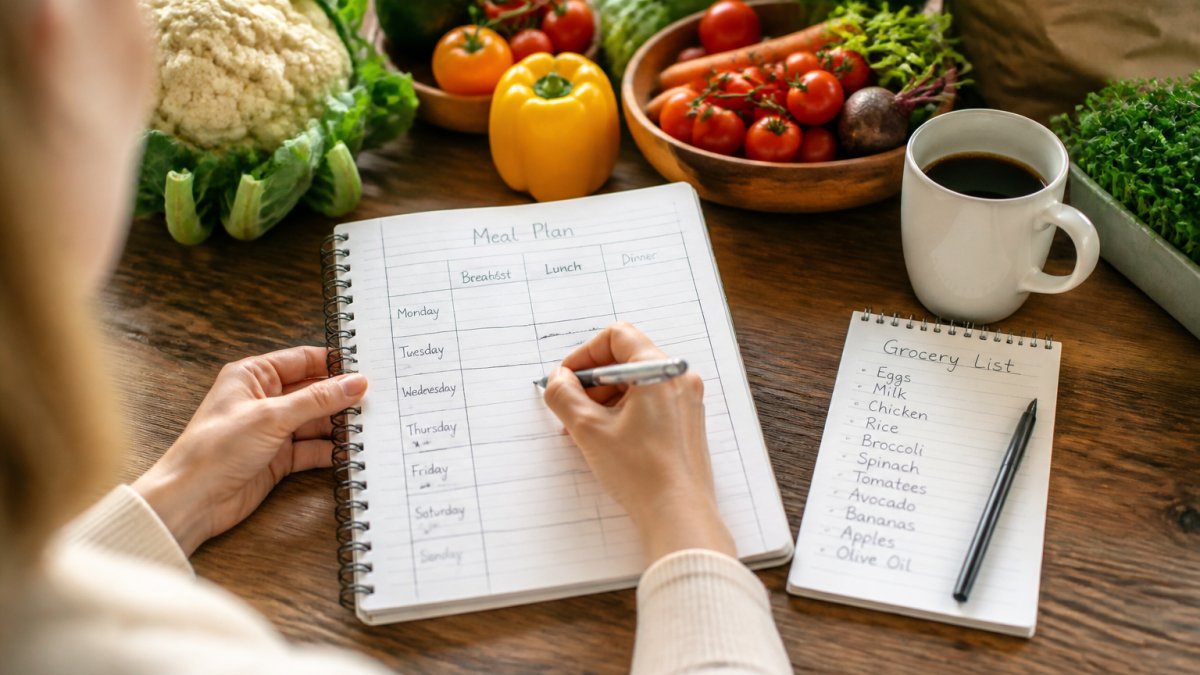
A Worked Example: One Week, Start to Finish
Here is a real week filled in, using the theme method below. Notice that nothing is fancy and two dinners repeat ingredients on purpose.
| Day | Theme | Meal | Key Ingredients | Est. Cost Per Serving |
|---|---|---|---|---|
| Monday | Pasta night | Spaghetti with marinara and frozen meatballs | Pasta, jarred sauce, meatballs, parmesan | Low |
| Tuesday | Chicken and vegetables | Sheet-pan chicken thighs with broccoli and potatoes | Chicken thighs, broccoli, potatoes, olive oil | Medium |
| Wednesday | Leftovers / quick | Chicken and rice bowls using Tuesday's extra chicken | Rice, leftover chicken, soy sauce, frozen peas | Low |
| Thursday | Ground meat | Taco night with ground turkey | Ground turkey, tortillas, lettuce, tomato, cheese | Medium |
| Friday | Pizza or takeout-style | Homemade flatbread pizzas | Flatbread, mozzarella, sauce, pepperoni | Low |
| Saturday | Slow-cooker or special | Slow-cooker chili | Ground beef, beans, canned tomatoes, onion | Low |
| Sunday | Prep day / family favorite | Sheet-pan salmon with roasted vegetables | Salmon, zucchini, bell pepper, lemon | High |
Two things are working here: Tuesday's chicken becomes Wednesday's bowls, so you cook once and eat twice, and Saturday's chili makes enough for a Monday lunch, which is why leftovers earn their own night.
Pick Your Meal Themes for the Week
Start by choosing themes for each day. This removes decision fatigue: instead of "What should we eat?" you ask "What kind of food goes with Monday?"
Common meal themes include:
- Monday: Pasta night
- Tuesday: Chicken and vegetables
- Wednesday: Leftovers or quick meals
- Thursday: Ground beef or turkey
- Friday: Pizza or takeout-style food
- Saturday: Something special or slow-cooker meal
- Sunday: Prep day or family favorite
You don't have to follow these exactly, the point is a pattern. Once you pick themes, choosing recipes gets much faster. A rotation of four to six themes you actually like is plenty.
Assign Meals to Days
Now pick recipes for each theme and write them on your simple meal planning template under the correct day. Include breakfast and lunch if you want, though many people start with dinners.
Keep it realistic: one new recipe, three or four repeats, and two "whatever's in the fridge" nights. Repeating meals saves time and money.
Extract Your Shopping List
List every ingredient from each recipe, grouped by store section, produce, meat, dairy, pantry, to shop faster and forget less.
Before writing anything down, run a pantry-first pass: check the fridge, freezer, and cabinets, cross off what you already have, and build the week around items closest to expiring. That's the biggest lever on your grocery bill.
Keep a Running "Use It Up" List
Add a small "Use it up" box to your template. Note half an onion, wilting herbs, or leftovers there, then slot those items into next week's meals first, that's how a template becomes a food-waste tool, not just a calendar.
Step 3: Create Your Free Printable Meal Planner
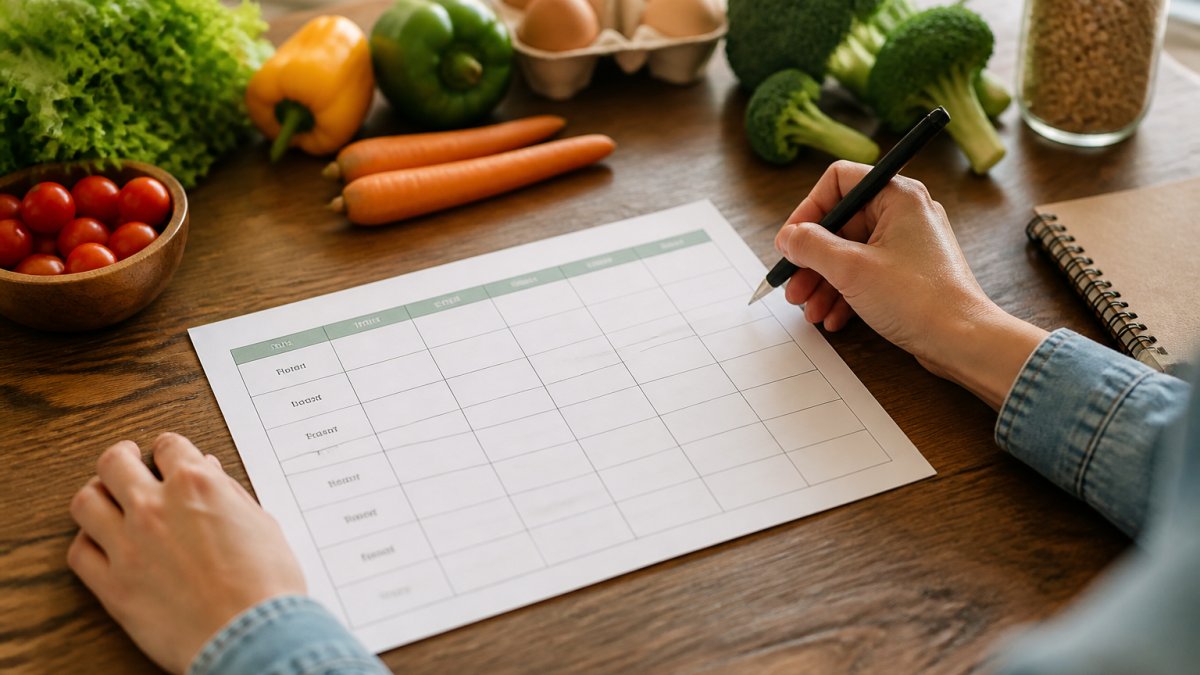
Now you're ready to design your template. A good meal planning template includes the right sections and nothing extra.
What to Include on Your Printable Page
A working meal planner has these sections:
- Week of: A space for the date
- Daily meals: Rows for each day with spaces for breakfast, lunch, dinner
- Grocery list: A section to write items you need
- Notes: Space for dietary needs, allergies, or special requests
That's it, anything beyond this is clutter. A clean, simple design is easier to fill in.
If you want to track nutrition or budget, add those sections later, but start simple.
Customizing for Your Household
Your template should match your life: a family of five needs a different layout than a single person, and dietary restrictions need space for notes.
Adjust your meal planning template to fit your situation:
- Family size: More meals to plan? Add extra columns.
- Dietary needs: Keto, vegetarian, allergies? Add a notes section.
- Cooking style: Meal prep? Add a prep day column. Slow cooker meals? Note that.
The best template is the one you'll actually use.
Step 4: Plan Your Monthly Meal Planning Template
Weekly planning works great; monthly planning prevents boredom and reveals patterns in your spending and eating. A monthly view is where budgeting, dietary needs, and food-waste reduction become visible.
Rotating Meals to Prevent Boredom
After four weeks, look at your plans together. Chicken every Tuesday is fine; chicken every single day means it's time to mix it up.
Create a rotation: week one chicken, week two beef, week three fish, week four plant-based. You get variety without starting from scratch.
A monthly meal planning template shows you the big picture. You can see patterns, spot gaps, and plan better. A simple monthly layout needs only four rows (one per week), a column for the protein or theme, a column for notes, and a running grocery total.
Add Budget Fields to Your Template
A monthly template should carry three money fields:
- Weekly grocery target: The amount you intend to spend before you shop.
- Actual spend: What the receipt says when you get home.
- Cost per meal: A rough figure you calculate by dividing the week's spend by the number of dinners you actually cooked.
You don't need exact numbers to start. Assign each meal a simple tag: low, medium, or high cost. Then aim for a mix, such as two high-cost meals, two low-cost meals, and three medium ones per week. Over a month, the pattern tells you which weeks run hot and which run lean.
Pantry-First Planning to Cut Waste
Before you plan any month, do a five-minute inventory. Walk through the freezer, fridge, and cabinets and note what needs to be used. Then build the first week of the month around those items. This is the single most effective way to lower your grocery spend without changing what you eat.
Keep a leftovers log on the monthly template. Each time you cook a meal that makes extra, write the date and what it was. When you plan the following week, pull from that log first.
Plan Around Dietary Needs and Allergies
A monthly view makes it easier to balance nutrition than a single week. Add a column for dietary notes, such as vegetarian, gluten-free, or nut-free, and mark each meal accordingly. If someone in the house has an allergy, note it at the top of the template so it's visible every time you plan. If you're tracking protein, fiber, or vegetables, add a simple checkmark column and aim for a target number of servings per week rather than counting every gram.
Review at the End of the Month
Set aside 15 minutes on the last day of the month. Compare your planned meals to what you actually ate. Note the meals you skipped and the ones you repeated. Then carry the winners into next month's rotation and drop the losers. Your template gets sharper every cycle, which is the whole point of planning monthly instead of weekly.
Common Mistakes to Avoid When Starting Meal Planning
Planning too many new recipes. You're excited. You want to try everything. Then Wednesday hits and you're overwhelmed. Start with mostly familiar meals. Add one new recipe per week.
Not checking your pantry. You already have rice. You already have olive oil. Check before you shop. This saves money and prevents waste.
Making your template too complex. Fancy templates look nice but take forever to fill in. Simple wins. Use it or lose it.
Forgetting to involve your family. If you live with others, ask what they want to eat. A plan nobody likes gets ignored. Include their favorites.
Not leaving room for flexibility. Life happens. Someone gets sick. Plans change. Build in a night for leftovers or takeout. Rigid plans fail. Flexible ones stick.
Making Your Meal Planning Stick: Pantry-First and Dietary Flexibility
The secret to keeping a meal planning template habit is making it fit your actual life, not forcing your life to fit the template.
Start with what you already have. Before you plan meals, look at your pantry, fridge, and freezer. What do you need to use?
Honor dietary needs and preferences. If someone in your house is vegetarian, include vegetarian meals. If someone has allergies, plan around them.
Keep a list of quick backup meals. On nights when the plan falls apart, you have options. Pasta. Eggs. Sandwiches. Quesadillas. These don't need to be fancy.
Review your plan each Sunday. Adjust it based on what actually happened that week. Did you eat the salmon? Great. Did you skip the kale salad? Note that.
Starting a meal planning habit doesn't require a fancy system.
Frequently Asked Questions
How do I make a simple meal plan for the week?
Start by choosing 5-7 meals you enjoy, then assign one to each day of the week. Write down the ingredients you need for each meal, combine duplicates into a single shopping list, and organize by store sections (produce, protein, dairy). Spend 15-20 minutes on Sunday planning, then shop once. This approach eliminates daily decision fatigue and reduces impulse purchases at the grocery store.
What should a weekly meal planning template include?
A functional weekly meal planning template needs: day-by-day meal slots (breakfast, lunch, dinner, snacks), a dedicated grocery list section organized by category, space for notes on prep tasks, and room for dietary restrictions or allergies. Include columns for meal themes (like Taco Tuesday or Pasta Night) to add structure and make planning faster. A simple meal planning template should fit on one page for easy printing and reference.
How do I plan meals and groceries at the same time?
Write your weekly meal plan first, then go through each recipe and list every ingredient needed. Group ingredients by store section (produce, meat, pantry items) as you write them down. Check your pantry and refrigerator before shopping to avoid duplicates. This combined approach helps reduce food waste and stay within budget.
What's the easiest way to start meal planning if I'm a beginner?
Begin with a simple meal plan for beginners: pick just 3-4 favorite meals and repeat them twice during the week. Use a basic template with day names and meal slots, nothing fancy. Spend 10 minutes listing ingredients, then shop. Once this feels automatic (usually 2-3 weeks), expand to more variety.